
What happened in the Westman Islands in 1973?
Icelandic terrain offers you a close look into the forces that created the island nation: volcanic land masses that were carved by glacial movement. The Westman Islands that can be found off Iceland’s southern coast, is where you can see incredibly recent evidence of new land bubbling out of a crater or rising out of the sea.
On 23rd January 1973, a volcanic fissure opened abruptly next to Heimaey, which is the largest island of the Westman Islands archipelago. Most of the island had to be evacuated. Today, you can actually hike and stand on Eldfell, the volcano that was born that night.
When visiting Heimaey, you can also see an island called Surtsey. Surtsey started to emerge from the Atlantic Ocean in 1963.
There are other questions visitors bring to the Westman Islands, too, including:
What are all these traditions about baby puffins about?
Can someone come and go to the islands as a day trip?
Why are they called the Westman Islands, anyway?
Read on to discover about the new volcano that appeared in 1973 and why the Westman Islands are one of the best places for puffin sightings and more.
What you’ll find in and around Heimaey#
Heimaey is the largest inhabited island of Vestmannaeyjar (the Icelandic name for the Westman Islands). It’s about 5.2 sq. miles and has a population of just over 4,400 people.
On this inhabited island, you’ll find:
An incredible local community. This is the largest and only permanently inhabited community in the Westman Islands. Its main economy is fishing.
Eldfell, the volcano born during the 1973 eruption, standing right next to the town.
Surtsey. The island that began emerging from the ocean in 1963. Surtsey offered scientists the opportunity to observe life colonising for the first time on entirely new land.
Landscapes and hiking routes all around the rest of the archipelago. Each of the volcanic islands offers an interesting terrain including cliffs and sea stacks and a natural panorama.
Enormous seabird colonies, including the famous puffins and baby puffins, or pufflings.
Why are they called the Westman Islands?#
The English name is a direct translation of Vestmannaeyjar. Vestmenn in Icelandic means “Westmen,” and eyjar means “islands.” But who were the Westmen?
The answer takes us back to Iceland’s settlement period. According to local stories, Hjörleifur Hróðmarsson, an influential Norse settler, was killed by enslaved men of Irish origin who then fled by boat to what are now the Westman Islands. Hjörleifur’s brother, Ingólfur Arnarson, pursued them there and killed them.
The Norse people knew that people from Ireland and the British Isles came from the west and were therefore called Vestmenn. The islands where the Westmen sought refuge thus became known as Vestmannaeyjar.
Many places around Heimaey link back to these events and names are inspired by that time as well.

The other residents: Puffins in the Westman Islands#
Volcanoes created the Westman Islands, but every spring, another force takes over the cliffs: puffins. They arrive by the millions. Although you can also spot puffins elsewhere in Iceland, it is the Westman Islands that are particularly famous for the enormous puffin colonies nesting there.
One of the best places to observe these adorable sea birds is Heimaey. The puffins nest in burrows along slopes and cliffs and they feed in the North Atlantic Ocean. Travelling on the ferry during summer months, you can see streams of puffins flying between ocean and colony. On your way to the Westman Islands, likely for the many hiking trails and viewpoints the puffin activity makes an added extra.
Toward the end of summer, the relationship between Heimaey and its puffins takes a turn when the island’s children go looking for baby puffins in the streets.
When can you see puffins in the Westman Islands?#
If seeing puffins is one of the reasons for your trip to the Westman Islands, then visiting between May and early September is the best time to visit. Puffins generally begin returning to Iceland during late April, so the main puffin viewing season runs throughout the summer when the adult birds are nesting and repeatedly travelling back and forth between their burrows and the sea.
Puffins are seabirds rather than year-round residents of the cliffs. They spend most of their lives at sea, coming ashore to breed. Once the breeding season ends, the adults return to the North Atlantic with their young, the cute pufflings.
Where is the best place to see puffins on Heimaey?#
The classic viewing spot for puffins is Stórhöfði in southern Heimaey. There’s a dedicated puffin lookout to watch the birds from. It’s a meeting point for local guided puffin walks.
What is a puffling?#
Toward the end of summer, the Heimaey puffin population changes when the chicks are born. The baby puffins, called pufflings, spend their first weeks hidden inside the burrows. Then during late August or early September, they’re finally ready to depart. Once at sea, baby puffins begin the marine stage of their life.
However, there’s an obstacle for some of them to overcome before they even get there.
Lighting from the human island inhabitants sometimes confuse the pufflings. Instead of heading toward the Atlantic, pufflings are drawn toward the illuminated town, where they end up on streets and in gardens. Hence children searching for pufflings.
How do children in the Westman Islands rescue baby puffins?#
During puffling season, Heimaey’s children and their families search the town after dark for baby puffins that have taken a wrong turn. They collect the stranded birds and return them to the coast and released them toward the ocean. Any birds that appear injured or otherwise need additional help are looked after and assessed by the island’s puffin rescue team.
Visitors find this an irresistibly endearing story.
Can visitors participate in the puffling rescue?#
Potentially yes, but this is one experience you can’t schedule months in advance. Puffling season is dictated by the birds rather than the calendar. Local tourism information says it generally occurs between late August and early September, lasting around three to four weeks, but the exact dates vary each year.
Guided puffling-rescue experiences are offered, but only once the season has begun.
Here are some key considerations when helping gather pufflings conscientiously:
Pufflings come out at night, and local searches begin well after nightfall
The pufflings are collected in cardboard boxes with a warm blanket placed underneath
Then they’re released the next morning, during the day, so that the lights of the town don’t continue to confuse them
Local efforts include tagging the pufflings too (the locals know how and where)
Any other questions, ask the locals
What else should you see on Heimaey?#
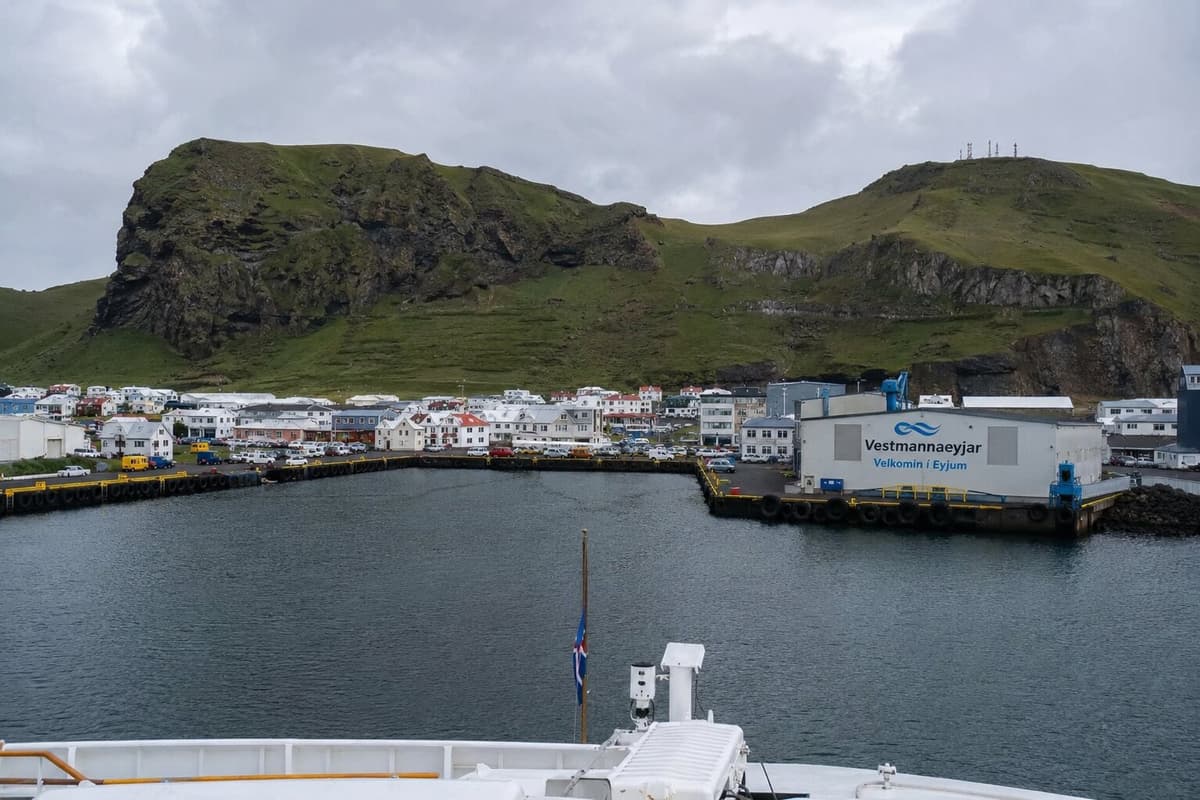
Whether you come during puffin season or not, there’s plenty to see on Heimaey. For example:
The ferry journey itself can be part of your sightseeing. The ferry’s approach to Heimaey passes between cliffs and volcanic formations with the town appearing beyond the harbour.
Elephant Rock and the sea caves: These are best appreciated from the water. Boat trips around Heimaey reveal other cliffs, caves, rock formations and animal habitats that can’t be seen from the land.
The imposing mountain called Heimaklettur looms above the harbour and is one of Heimaey’s best hiking areas. Note that this route is steep and includes challenging sections, so gear up with the right hiking equipment.
Stórhöfði is worth visiting even outside puffin season for its cliffs, views across the archipelago, and accessibility to popular hiking paths.
The Beluga Whale Sanctuary (part of the SEA LIFE Trust sanctuary) is an eye-opening experience; visitors often consider it the highlight of their trip.
The town, harbour, local restaurants and fishing culture. Leave time to explore the working community with its charm as a traditional Icelandic fishing town.
The “National Festival” (Þjóðhátíð in Icelandic) is an enormous annual summer festival at the beginning of August with days of camping, community, live music, fireworks, and much more. Visitors planning to visit around the festival dates need to book well in advance.
What to pack for the Westman Islands#
Iceland’s weather shifts quickly, and the Westman Islands are no exception. Wind off the Atlantic reaches the cliffs even on clear days, and the ferry crossing brings its own conditions. When wind picks up on open water, spray from the waves can reach passengers on deck. Even if it doesn’t actually rain during your trip to the islands, expect to get wet on the ferry.
A waterproof outer layer, along with a warm mid-layer and sturdy footwear are essential for your visit. For anyone caught off guard by the weather, an Icewear store on Heimaey sells outdoor gear designed for Iceland’s shifting conditions.
Can you visit the Westman Islands as a day trip?#
Yes, you can. The short ferry crossing means Heimaey is an easy addition to any trip through the southern coast of Iceland.
How to get there and get around#
The Herjólfur ferry normally sails from Landeyjahöfn, with a crossing time of roughly 35-45 minutes.
Weather and sea conditions can affect schedules, so make certain you check the current ferry information as your travel time approaches.
Rental cars can be taken on the ferry (subject to space and the rental company’s terms). Vehicle reservations need to be made in advance.
Most day-trippers, however, don’t necessarily need a car. The town, harbour, Eldfell, and several other sights are withing walking distance of the harbour. A car offers flexibility and is useful for reaching Stórhöfði and exploring more of the island.
Is one day enough, or should you stay overnight?#
A day trip works well if you want to explore the town and harbour and choose one additional experience, such as Eldfell or a boat trip.
An overnight stay is ideal if you want to explore further, explore the islands without rushing, go hiking, hike Heimaklettur, take a boat trip experience puffling season after dark, or to gain added flexibility in case of adverse weather conditions.
What if the weather is bad?#
North Atlantic weather can impact the ferry, boat trips, hiking and visibility. It’s essential to check the Herjólfur ferry status before setting out and avoid arranging a tightly timed flight or other critical connection immediately after your return journey.
If outdoor plans fall apart, the Beluga Whale Sanctuary visitor facilities, restaurants and other indoor attractions offer alternatives, or another option is to relive the events from 1973 with a fantastic volcano exhibition (Eldheimar).
If Heimaey is an important part of your trip to Iceland, then an overnight stay offers considerably more flexibility.
Frequently asked questions about the Westman Islands#
What are the Westman Islands?#
The Westman Islands, or Vestmannaeyjar in Icelandic, are a volcanic archipelago just off the southern coast of Iceland. Only the largest island Heimaey is permanently inhabited. The islands are famous for their volcanic landscapes, enormous Atlantic puffin colony, fishing culture and extraordinary recent geological changes.
What happened in the Westman Islands in 1973?#
On 23rd January 1973, a volcanic fissure opened on the island of Heimaey. Nearly all the island’s residents were evacuated, and the eruption created the new volcano, Eldfell. Lava destroyed or buried hundreds of buildings and threatened to close Heimaey’s fishing harbour. Islanders famously pumped seawater onto the advancing lava to cool it, thus saving the harbour.
Why are they called the Westman Islands?#
Vestmannaeyjar means “Westman Islands” in Icelandic. According to Icelandic folklore, the enslaved Irish men who killed Hjörleifur Hróðmarsson fled to these islands, where Ingólfur Arnarson pursued them. Norse people referred to people from Ireland and the British Isles as “Westmen” because they came from lands to the west, giving these islands their name.
When is the best time to see puffins in the Westman Islands?#
Plan to visit between May and early September, late spring and summer generally offer the most reliable time to observe adult puffins. Puffins spend most of the year at sea and return to land to breed. Pufflings (young puffins) generally make their way from burrows to sea during early September.
Where is the best place to see puffins on Heimaey?#
Stórhöfði, at the southern end of Heimaey, is the island’s most popular puffin-viewing site. Puffins can also be seen elsewhere along the coast and from the coast via boat trips.
What is a puffling?#
A puffling is a baby puffin. After hatching and spending its first few weeks in its burrow, the young bird emerges one night and makes its way toward the ocean.
Why do children in Vestmannaeyjar rescue baby puffins?#
When young puffins leave their burrows in late summer, some become confused by the lights of the town and head inland instead of toward the sea. Local children and families search the streets after dark, collect stranded pufflings, and release them safely toward the ocean. The annual puffling rescue has become one of Heimaey’s most distinctive traditions.
Can you see puffins in the Westman Islands in September?#
Possibly, but September is generally too late for reliable viewing of adult puffins at the nesting cliffs. Most have returned to sea by then. Early September can, however, overlap with puffling season, when some baby birds are leaving their burrows. The exact timing varies each year.
How do you get to the Westman Islands?#
Most visitors reach Heimaey on the Herjólfur ferry, which normally operates from Landeyjahöfn (on Iceland’s southern coast). Because weather and sea conditions can affect operations, you’ll need to check the current sailing schedule and departure information before you travel.
How long is the ferry to the Westman Islands?#
The normal ferry crossing between Landeyjahöfn and Heimaey takes about 35-45 minutes, making the Westman Islands very practical to visit as part of a southern coast itinerary.
Can you take a rental car on the ferry to Heimaey?#
Yes, the ferry carries vehicles. You need to reserve vehicle space in advance and check your rental company’s terms before taking the car to the island.
Do you need a car on Heimaey?#
Not necessarily. The town, harbour and several attractions are close enough to explore without one. A car is useful if you want to reach places like Stórhöfði, or to cover more of the island in a limited amount of time. Tours, taxis and other transport options are available and work for anyone arriving without a vehicle.
Can you visit the Westman Islands in one day?#
Yes. The short ferry crossing makes Heimaey a feasible day trip from Iceland’s coast. In one day, for example you can explore the town and harbour and the 1973 eruption story of Eldfell. There is too much to see and do to try and see everything in a single day.
Is it worth staying overnight on Heimaey?#
Yes, particularly if the Westman Islands are an important part of your trip to Iceland. Staying overnight gives you more time for hiking, boat trips, wildlife viewing and exploring the town, while also giving you flexibility if the weather changes. An overnight stay is especially worthwhile during puffling season because the traditional searches take place after dark.
Can you visit Surtsey?#
Not as an ordinary visitor. Surtsey is highly protected and access is restricted primarily to scientific research. That limited human interference allows researchers to study how plants and animals colonise new volcanic land. Visitors to the Westman Islands can see Surtsey from a distance in suitable conditions but don’t expect to land there.
More blog posts

Icewear opens new stores in Stykkishólmur and Seyðisfjörður
With new stores open in Stykkishólmur and Seyðisfjörður, you can get the gear you need and the gifts to take the memories home with you.
Read more

Friendship bracelet patterns: 20 cute designs (step-by-step)
Threaded friendship bracelets, also known as string bracelets or friendship bracelets, give you endless pattern options to express yourself and have fun. From beginner to advanced levels, learn all about friendship bracelet patterns here.
Read more

How to make friendship bracelets: Step-by-step beginner guide
Learn how to make friendship bracelets with Icewear’s beginner-friendly guide explaining materials, basic knots, techniques and common mistakes.
Read more