
How to dress for cold weather: The ultimate guide
As temperatures drop and you prepare for hikes, walks, or outdoor runs, being appropriately dressed for cold weather becomes essential.
This guide from Icelanders will prepare you for bitterly cold conditions and help you avoid common mistakes. Who better to layer up with than those who live in the extreme cold?
The most effective way to stay warm is to layer correctly, choose materials that hold the heat, and protect areas like your head, hands, and feet, which lose heat quickly.
Retaining body heat, staying dry, and trapping warm air between layers are good ways to insulate your body and stay comfortable in cold and changeable conditions, but knowing how to prepare accordingly is key.
Key findings:#
Dressing in layers is the most effective way to stay warm. The base layer manages moisture, the mid layer traps and retains heat, and the outer layer protects against wind and rain, creating a system that is more effective than a single thick garment.
Wind and wet conditions accelerate heat loss, with data showing that an air temperature of 0°F with 15 mph wind produces a wind chill of -19°F, where exposed skin can freeze in 30 minutes, making wind-resistant and water-repellent outer layers essential.
Wool is the most effective material for cold-weather clothing based on thermal conductivity testing, with Icewear’s analysis showing Icelandic wool (K=0.016) retains significantly more heat than standard wool (K=0.039), cotton (K=0.040), or polyester (K=0.050); lower K values indicate less body heat escaping through the fabric.
Ensuring your layers are breathable is a must if you’re moving. Physical activity can increase metabolism by 5 to 15 times resting levels, with 70% to 100% of that energy released as heat.
How wind chill makes cold weather more severe#
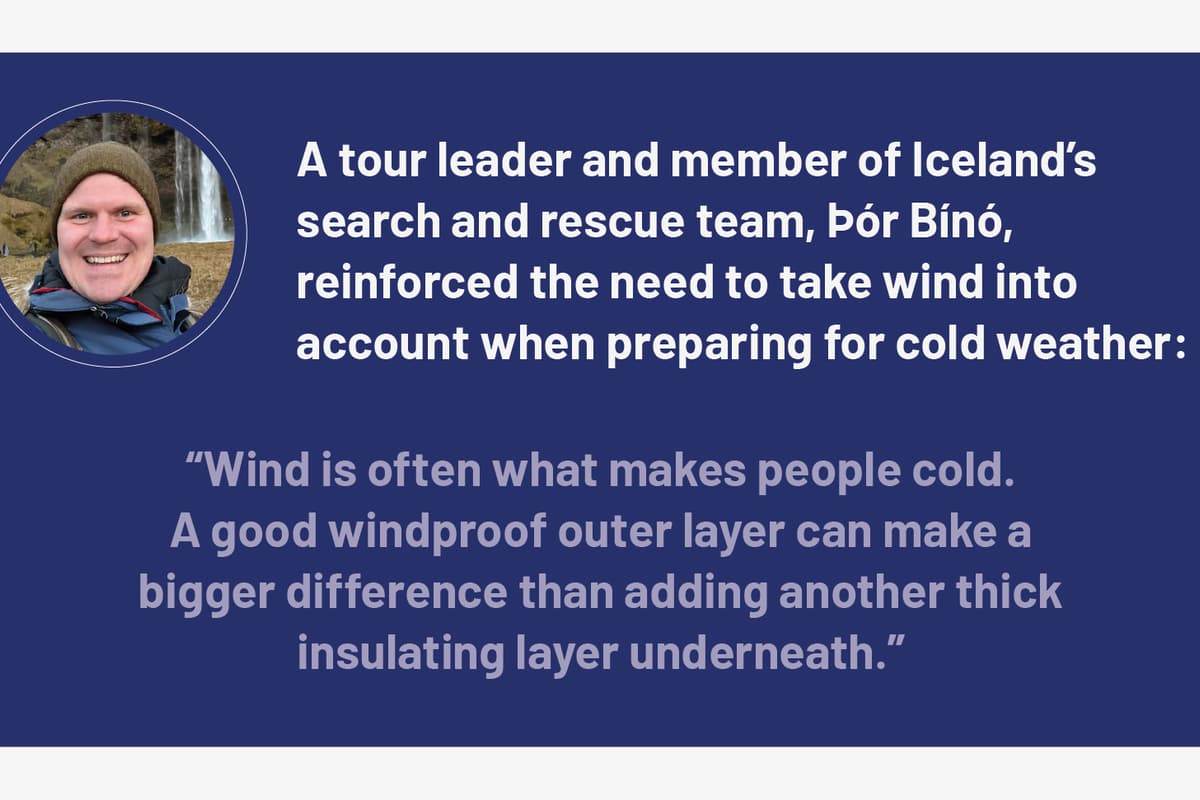
When preparing for the weather, it’s important to take all factors into account, including the air temperature and wind speed. Together, they make the weather feel colder, which can also be dangerous if you’re not prepared.
When wind combines with cold air temperature, it exacerbates the cold. This is due to increased heat loss, with the chill carrying the warmth away from the body more quickly.
For example, weather data shows that an air temperature of 30°F (-1°C) can feel closer to 21°F (-6°C) with moderate wind, while lower temperatures combined with stronger winds can feel more than 20°F colder than expected. As wind chill increases, exposed skin cools more quickly, and the body must work harder to stay warm.
Find an example of the effect wind chill has on the temperature below, with the table showing how just 10 miles-per-hour winds can change how cold it feels. Air temperature doesn’t always show the full picture, hence why many apps and weather reports have a “feels like” category.
Air temperature vs how cold it feels with 10 mph winds#
| Air temperature (°F) | Feels like (°F) |
|---|---|
| 40 | 30 |
| 35 | 24 |
| 30 | 17 |
| 25 | 11 |
| 20 | 6 |
| 15 | 0 |
| 10 | -9 |
| 5 | -15 |
| 0 | -22 |
| -5 | -28 |
| -10 | -35 |
| -15 | -41 |
| -20 | -48 |
| -25 | -55 |
| -30 | -61 |
| -35 | -68 |
| -40 | -74 |
| -45 | -81 |
Layering up is important to prevent heat loss in windy conditions; three loose-fitting layers and a wind- and rainproof outer layer could help mitigate the effects of the elements.
Why layering is the foundation of cold-weather clothing#
Dressing in layers for cold weather is important as the layers work together to reduce heat loss, manage moisture and protect you from the elements. Each layer has a different role and together they work as the perfect combination to protect your body from the cold.
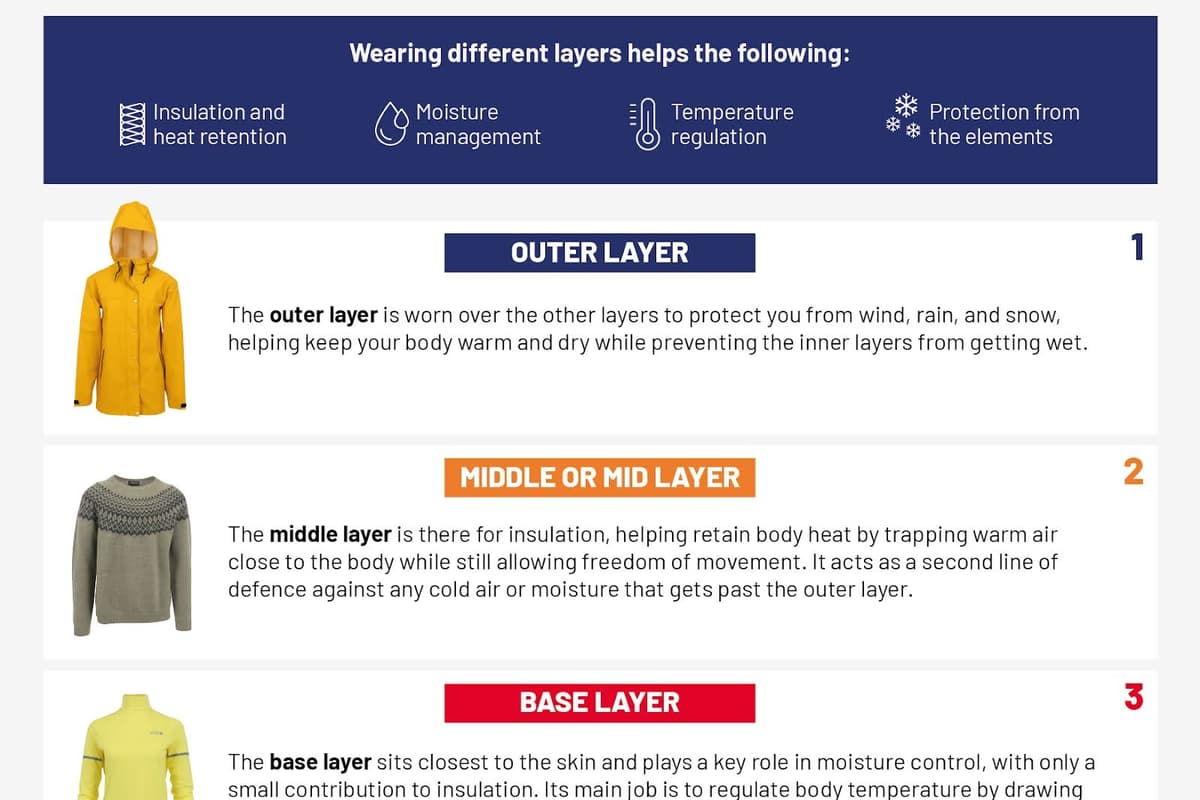
Wearing different layers helps with the following:
Insulation and heat retention
Moisture management
Temperature regulation
Protection from the elements
Experienced cold-weather professionals treat clothing as a system rather than a set of individual items. According to the expert, Bínó, this approach is simple: “I always think of clothing as a system, not individual items. Each layer has a job, and together they give you flexibility as conditions change.”
The key to walking in extreme conditions is to continue moving and adapt as conditions change. The hiking expert explains the importance of adjusting to the weather in real time: “Several lighter layers work better than one heavy one. They trap heat more effectively and are much easier to adjust when you warm up or cool down.”
Outer layer#
The outer layer is worn over the other layers to protect you from wind, rain, and snow, helping keep your body warm and dry while preventing the inner layers from getting wet.
A good outer layer is lightweight, loose enough to fit comfortably over other clothing, and breathable, with ventilation features such as breathable fabrics or zip vents to release excess heat during movement, while wind-resistant and water-repellent outer trousers can provide the same protection for the lower body when worn over base and mid layers.
In freezing weather where you’re unlikely to remove the layer, you could look at an insulated parka as a protective option, ideal for Icelandic winter weather.
Middle or mid layer#
The middle layer is there for insulation, helping retain body heat by trapping warm air close to the body while still allowing freedom of movement. It acts as a second line of defence against any cold air or moisture that gets past the outer layer.
Choosing warm materials is key, with wool and fleece providing reliable warmth without excessive bulk. During cold conditions, things can change fast, hence the need for lightweight, packable options.
In fast-changing conditions, flexibility matters just as much as warmth. Bínó adds: “In places like Iceland, the weather can change fast. I always choose layers that are easy to remove and pack, especially mid-layers, so I can adapt without stopping for long.”
Base layer#
The base layer sits closest to the skin and plays a key role in moisture control, with only a small contribution to insulation.
Its main job is to regulate body temperature by drawing perspiration away from the skin, helping prevent both chilling and overheating, which is why it should fit snugly and be made from breathable, quick-drying fabrics rather than cotton, which holds moisture and leaves you feeling colder.
For cold-weather activity, materials like Icelandic wool are particularly effective because they wick moisture, dry efficiently, and remain breathable as activity levels change.
A well-chosen base layer supports the flexibility of layered dressing, allowing you to ventilate and adjust layers throughout the day as your body temperature rises during movement and drops during rest, keeping you comfortable in changing conditions.
Why clothing materials matter in cold weather#
Dressing for the right temperature is essential, as is choosing materials that retain heat. The warmest materials are wool and cotton. Wool and cotton offer the best thermal conductivity, ensuring they keep the most heat.
Best pure materials for staying warm#
When looking at pure materials over blends, Icewear’s research found that wool consistently performs best at retaining heat, with thicker Icelandic wool offering even stronger insulation.
Cotton and polyester also retain warmth to a degree, but wool’s lower thermal conductivity means less body heat is lost through the fabric, which is why it is so commonly used in cold-weather clothing. Thermal conductivity measures how easily heat passes through a material. Materials with a lower thermal conductivity value allow less body heat to escape, meaning they keep you warmer in cold conditions.
It’s important to note that thickness and layering still play a major role, as even warmer materials will perform poorly if worn too thin or without proper layering. In practice, pure materials work best when chosen for their role within a layered system rather than worn alone.
| Rank | Material | Temperature | Thermal Conductivity |
|---|---|---|---|
| 1 | Icelandic wool | 59°F | K=0.016 |
| 2 | 100% wool | 59°F | K=0.039 |
| 3 | 100% cotton | 59°F | K=0.040 |
| 4 | 100% polyester | 59°F | K=0.050 |
| 5 | Silk | 59°F | K=0.066 |
Bínó vouches for wool’s ability to retain warmth: “I rely a lot on wool, especially Icelandic wool, because it keeps you warm even when it gets damp. That’s why I trust it in cold, windy weather.”
Best material blends for staying warm#
Material blends combine natural fibers with synthetic fabrics to balance warmth, durability, and cost.
Icewear’s analysis found that wool-acrylic blends perform exceptionally well at retaining heat, as acrylic reduces breathability and limits heat loss, while wool contributes natural insulation.
Blends can offer strong thermal performance, but breathability varies, which is why they are best chosen based on the expected coldness and activity level.
| Rank | Materials | Temperature | Thermal Conductivity |
|---|---|---|---|
| 1 | Wool-acrylic blend | 59°F | K=0.035 |
| 2 | Cotton-acrylic blend | 59°F | K=0.072 |
| 3 | Viscose+Lycra | 59°F | K=0.104 |
| 4 | Cotton+polyester | 59°F | K=0.120 |
| 5 | Melange+polyester | 59°F | K=0.136 |
How to keep your hands and feet warm#
Keeping your hands and feet warm is key in cold weather because fingers and toes are particularly vulnerable to cold exposure and are often the first areas affected by frostbite.
Using insulating, well-fitting accessories that work with your layers helps maintain comfort, dexterity, and circulation in low temperatures.
Hands are particularly exposed, so insulated gloves or mittens made with warm linings and wind-resistant outer materials are key. In colder or windier conditions, mittens retain heat more effectively than gloves, while water-repellent outer fabrics help prevent moisture from reducing warmth.
Feet stay warmer when insulation, moisture control, and fit are balanced. Warm socks made from insulating fibers such as wool help retain heat while managing moisture, and wearing them with well-insulated, weather-appropriate footwear prevents heat loss from cold ground or snow.
Accessories work best as part of your overall layering system rather than as an afterthought. Adding warm socks, gloves, and headwear alongside your core layers helps create a complete cold-weather set-up, especially in Icelandic conditions where wind and prolonged exposure are common.
How to judge cold weather conditions before getting dressed#
Looking outside isn’t enough to judge the conditions, and that’s why using a reliable app comes in handy. There are plenty of useful forecast apps out there and most of them now have a “feels like” section that accounts for things like wind and rain and the effect that has on our bodies (sometimes making it seem colder than it is). That means it gives you more information than just the temperature, allowing you to prepare accordingly.
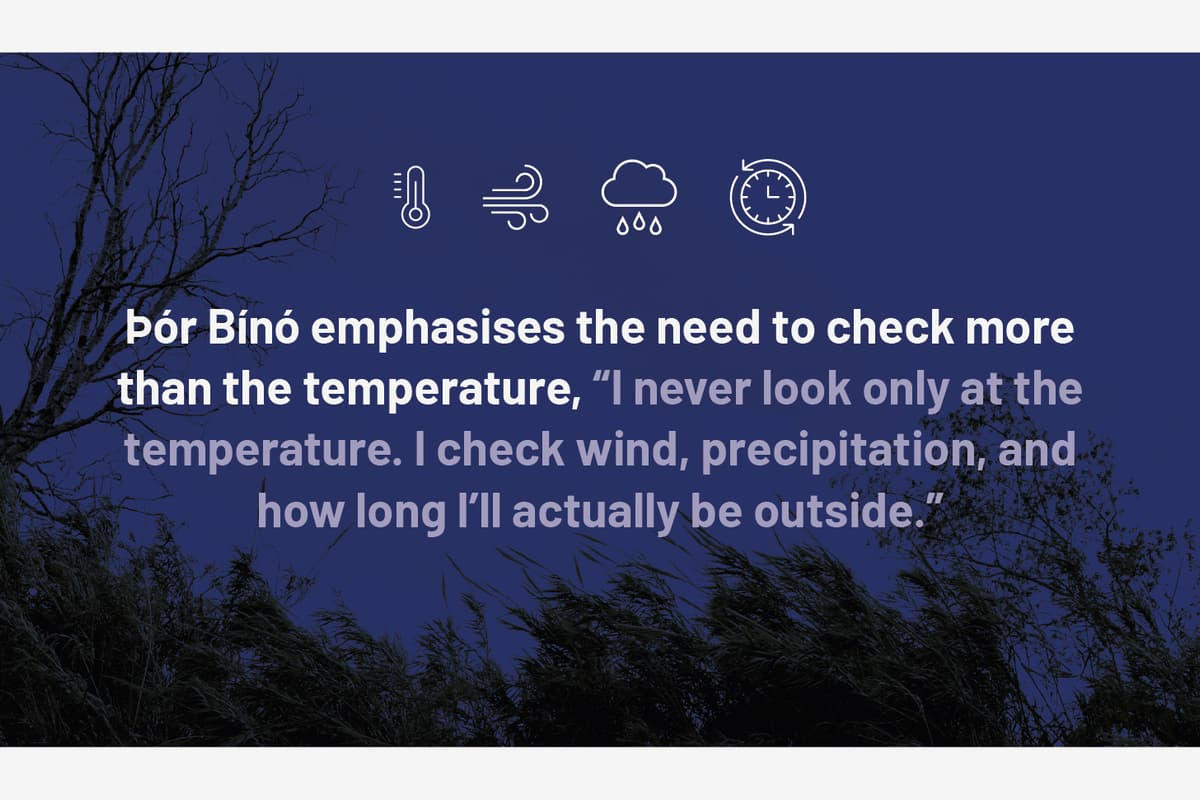
Here are some things to consider before getting dressed.
Wind conditions: Wind affects how quickly heat is lost from exposed skin and can make cold conditions feel even colder. In windy weather, choosing wind-resistant outer layers helps limit exposure and reduce wind chill.
Rain, snow, and wet conditions: Wet weather increases cooling by allowing heat to be drawn away from the body more easily. Waterproof or water-repellent outer layers help keep insulating layers dry, which supports overall warmth and comfort.
Temperature and freezing conditions: Cold and sub-zero temperatures increase your risk of cold-related injuries, particularly when skin is exposed for longer periods. In these conditions, wearing additional insulating layers and covering exposed areas becomes more important.
Time spent outdoors: The longer you're outside, the more heat your body can lose. Short trips generally require fewer layers, while extended time outdoors calls for greater insulation and clothing that can be adjusted as conditions change.
How active you will be: Activity level plays a big role in how warm you stay. As Bínó explains, people often feel the cold most when they stop moving. He points to northern lights trips as a common example, where standing still causes body heat to drop quickly. Consider whether you’ll be walking, running, or stopping for long periods, and plan extra layers you can add during breaks.
How to prevent overheating in cold weather#
Adding layers is a balance between staying warm in the cold and not overheating, which is why removable, breathable layers are the most functional.
Overheating can still happen in cold weather because movement spikes your heat output fast, and your layers can trap it. During exercise, metabolism can jump 5 to 15 times above resting levels, and 70% to 100% of that energy is released as heat that your body has to get rid of. If your clothing is too insulating or not breathable, that heat builds up and you start sweating more.
Your body mainly dumps heat by sweating and by pushing more blood flow to the skin, but sweat only cools you properly when it can evaporate. That’s why removable layers, zip vents, and breathable fabrics matter, especially once you’re walking uphill, running, or hiking.
The next step is dressing in layers you can vent or remove fast before sweat builds up and starts working against you.
Layer strategically#
Using Icewear's advice from above, ensure that you layer correctly, considering the outer, inner and base layers, and each layer’s purpose. Picking quality material that’s equally warm and breathable will help you regulate your temperature. Also, bear in mind that the base layer plays a big part in regulation, wicking away sweat and ensuring your body can breathe, so pick the best base layer for this role.
Ventilate when needed#
Ventilation features such as zip openings or breathable outer layers help release excess heat and moisture. Allowing heat to escape reduces discomfort and helps prevent overheating during movement or physical activity.
Avoid overdressing during activity#
As the well-known saying goes, be bold, dress cold,” which really means allowing for warming up during your activity. High-energy activities generate body heat quickly. Starting with fewer layers and adding insulation as needed helps reduce excessive sweating and supports better temperature regulation throughout the day. Also, if you’re feeling too hot, then be sure to take more breaks, eat snacks and drink plenty of water.
Sources#
https://www.nia.nih.gov/health/safety/cold-weather-safety-older-adults
https://www.osha.gov/emergency-preparedness/guides/cold-stress
https://www.mayoclinic.org/diseases-conditions/frostbite/symptoms-causes/syc-20372656
https://www.outdoors.org/resources/amc-outdoors/outdoor-resources/how-to-layer-for-winter
More blog posts

Icewear opens new stores in Stykkishólmur and Seyðisfjörður
With new stores open in Stykkishólmur and Seyðisfjörður, you can get the gear you need and the gifts to take the memories home with you.
Read more

Friendship bracelet patterns: 20 cute designs (step-by-step)
Threaded friendship bracelets, also known as string bracelets or friendship bracelets, give you endless pattern options to express yourself and have fun. From beginner to advanced levels, learn all about friendship bracelet patterns here.
Read more

How to make friendship bracelets: Step-by-step beginner guide
Learn how to make friendship bracelets with Icewear’s beginner-friendly guide explaining materials, basic knots, techniques and common mistakes.
Read more