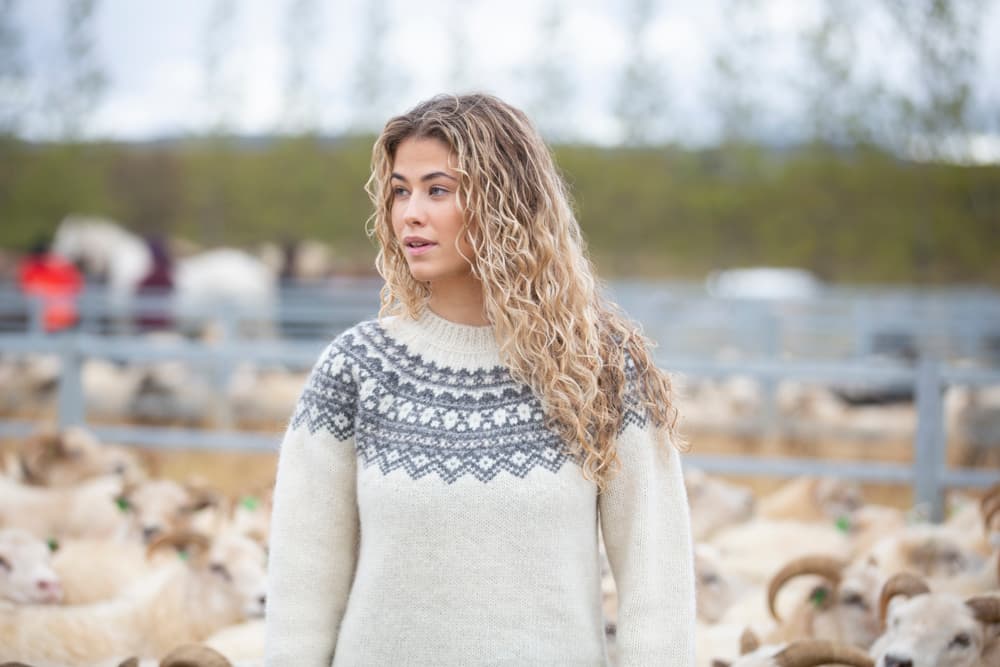
Réttir in Iceland: Inside the traditional Icelandic sheep roundup
After summer in Iceland, by mid-September, one of the country’s oldest working traditions begins. After spending the warm months grazing freely across the highlands, hundreds of thousands of Icelandic sheep must be gathered and brought home before winter. This annual sheep roundup is known as réttir (roughly, “roundup” or “sorting” in Icelandic).
For anyone curious about Icelandic culture, understanding réttir offers a window into the rhythms of sheep farming life in Iceland. But réttir is not a staged festival or tourist attraction. The gathering is serious agricultural work, and the sorting pens are working spaces for farmers.
This article offers a look behind the scenes into the millennium-old tradition.
What is réttir?#
Réttir, Iceland’s annual sheep roundup, takes place across Iceland in September. After lambing season in the spring, sheep and lambs are all released to graze throughout the summer months. It’s in Iceland’s highlands, valleys and mountains that flocks mingle and mix.
When summer comes to an end, farmers and rural communities cooperate to gather the sheep and bring them down to communal sorting pens. (The word réttir is commonly used for the roundup tradition because the rétt is the livestock pen where the mixed flock is sorted.)
So, come September, with more than 600,000 sheep on the island, réttir involves an enormous amount of work.
When is réttir in Iceland?#
There is no single national réttir date. Timing varies by geography, weather and local practices, so communities organize their roundups separately. The season generally begins in early September and can continue into October.

How the Iceland sheep roundup works#
The réttir roundup depends on cooperation, and farmers never set out just to retrieve the sheep belonging to their own flock. After Icelandic sheep have spent the summer roaming across common grazing areas, the first priority is to bring all sheep back to central areas. After the flocks are in the rétt, only then are they separated by farm.
Before sorting day, teams spread out across assigned sections of mountain and valley to search systematically for sheep. Depending on the terrain, people travel on foot, on ATVs or on Icelandic horses. Work lasts several days.
Riders and walkers have to cover a lot of ground so that sheep tucked into gullies, ridges and distant pastures aren’t missed. That’s where local knowledge and proper equipment really matter. Locals know the likely places sheep shelter and the safest routes through difficult terrain.
September weather can turn quickly, too. Cold rain, strong wind and low temperatures at elevation make the gathering physically demanding. The same Icelandic climate that shaped the hardy Icelandic sheep breed also shapes the work required to bring the flock safely down before winter.
Inside the rétt: how farmers sort the sheep#
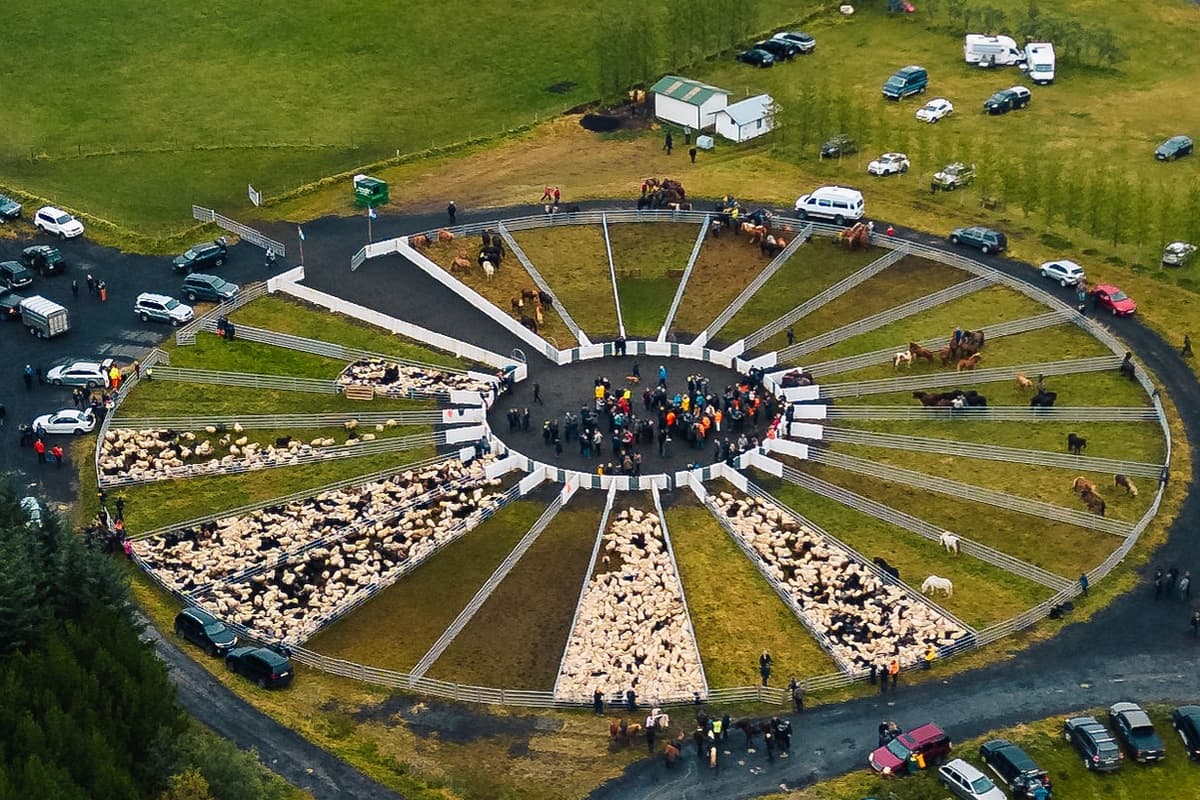
Once the sheep are gathered, they enter a communal sheepfold. Traditional rétt pens are circular with a large central holding area and smaller compartments radiating outward like the spokes of a wheel. Those outer pens correspond to individual farms or owners.
Farmers, relatives and helpers then move through the central flock to identify sheep by registered ear markings and identification tags. After that, they guide each sheep into the appropriate farm pen. What looks like cheerful chaos from outside is actually a practiced sorting system.
Réttir is a celebrated Icelandic tradition#
Réttir is an agricultural necessity, but generations of shared experience have also made it a social tradition. Children grow up watching and helping as they’re able, and neighbors work side by side.
That communal effort is why the end of the work naturally transitions to festivities. Coffee and food circulate, and in some communities music, singing or dance follows. Réttir also marks a seasonal turning point for all of Iceland as colder temperatures settle in and preparations for winter begin.
The history of Icelandic sheep and wool#
Sheep arrived with Iceland’s Norse settlers more than a thousand years ago and became central to survival and the economy on the North Atlantic island, providing food, skins and wool. Centuries of geographic isolation gave way to the distinctive Icelandic sheep breed with its unique wool that the country now celebrates.
Icelandic wool and lopapeysa sweaters#
The fleece of the Icelandic sheep breed has two characteristic layers: the longer, coarser outer fibers known as tog, which repel moisture, and the softer insulating undercoat called þel. Together, these two fibers provide the protection perfectly suited for Iceland’s changeable climate.
That unique dual-fiber combination is also part of the story of Icelandic knitwear, including the lopapeysa, the iconic Icelandic wool sweater. Seen through this lens, réttir connects the highland grazing and Icelandic farming to the wool traditions that continue to shape the country’s culture.
Learn how to make your own lopapeysa here.
Réttir when traveling in Iceland#
For most travelers to Iceland, réttir is about understanding what happens in September when country roads suddenly fill with sheep, Icelandic horses, trailers and farm vehicles. Behind that moment is a carefully organized community effort that began days earlier in the mountains and will end only when every flock is sorted and sent home.
The fact that réttir is not staged for visitors says something important about Iceland sheep farming, too. This tradition survives because it still has a job to do.
When traveling to Iceland, if you roam the countryside in September, you might see evidence of réttir. And if you do, admire it briefly from afar and then let the community do their work.
More blog posts

Icewear opens new stores in Stykkishólmur and Seyðisfjörður
With new stores open in Stykkishólmur and Seyðisfjörður, you can get the gear you need and the gifts to take the memories home with you.
Read more

Friendship bracelet patterns: 20 cute designs (step-by-step)
Threaded friendship bracelets, also known as string bracelets or friendship bracelets, give you endless pattern options to express yourself and have fun. From beginner to advanced levels, learn all about friendship bracelet patterns here.
Read more

How to make friendship bracelets: Step-by-step beginner guide
Learn how to make friendship bracelets with Icewear’s beginner-friendly guide explaining materials, basic knots, techniques and common mistakes.
Read more